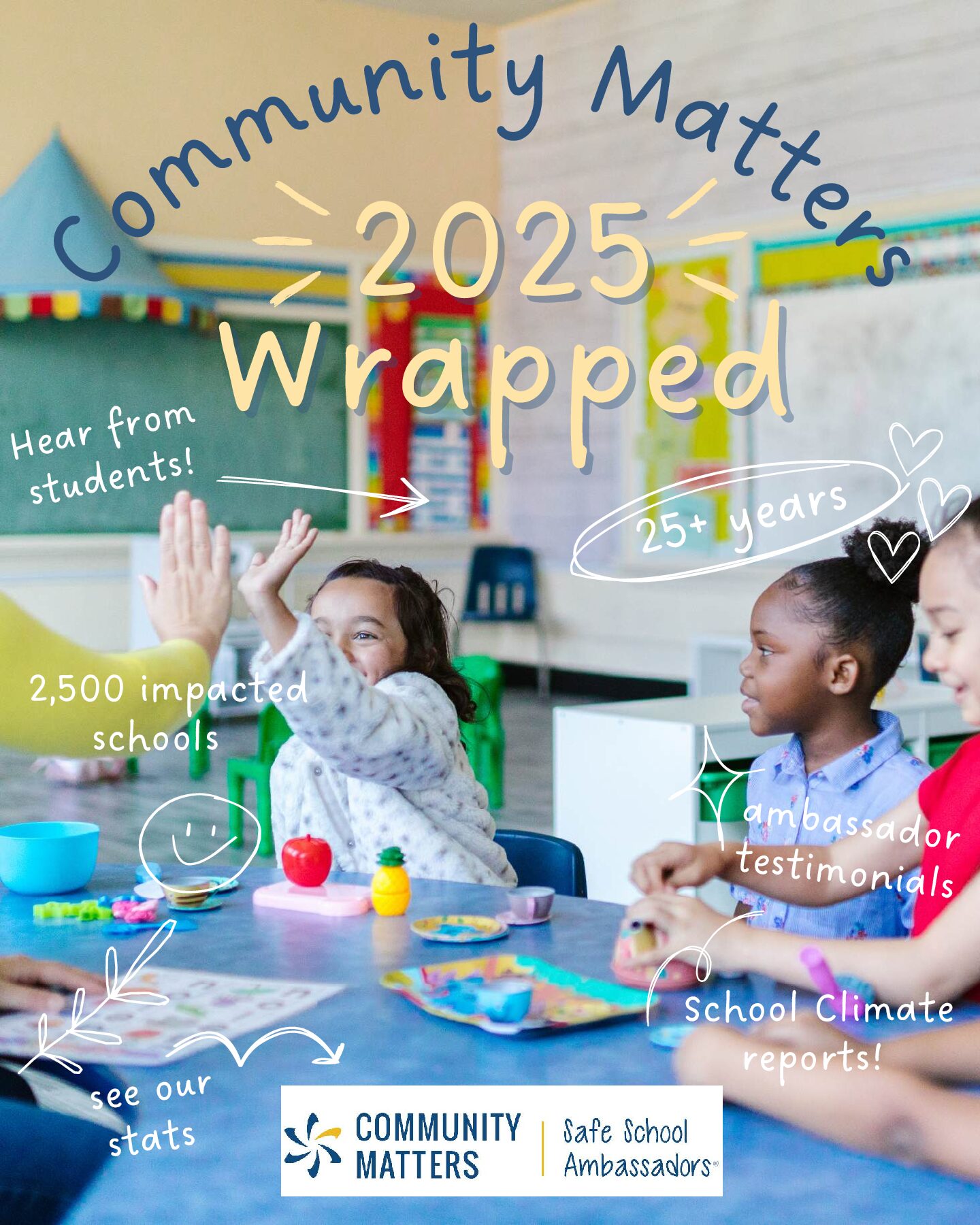
Discover Community Matters’ 2025 Wrapped report, from 248 programs delivered to nearly 10,000 change-makers reached across our communities.
Author: Max Buschman
Youth Mental Health – How the Safe School Ambassadors® Program Makes a Difference
By Ashley Ranger
Published December 4, 2025
Youth today are experiencing constant stimulation. If they are not on their phones, they are staring at a computer screen or TV screen for most of their day. While we have seen the constant growth of technology entering our everyday lives, young people have become highly dependent on it for social connection.
The COVID-19 pandemic fostered an environment where young people only had technology to connect, even if that connection was artificial. These artificial connections between peers have only increased anxiety when it comes to person-to-person interactions. When students returned to school, they came face-to-face with tangible reality which caused them to further isolate themselves. Technology allows people to mask, even play a role, but in person there are no filters.
Coming back from years of digital isolation caused spikes in anxiety and depression amongst youth. With no filters comes insecurity, which causes the need for students to protect themselves, and sometimes protecting themselves means putting down others. According to the CDC, in 2023 40% of students reported feelings of isolation, loneliness, and sadness, 20% reported having suicidal ideation. This statistic shows how much of an impact the COVID-19 pandemic caused, and that students are still learning to heal from it. The question is, how does the Safe School Ambassadors Program work to tackle the youth mental health crisis?
The Safe School Ambassadors Program is an evidence-based program that empowers youth to create safe, inclusive, and welcoming school climates. The program teaches ‘Ambassador Actions’ that students can use to safely intervene when they witness bullying and stop it before it can turn into physical violence. One of the actions is called “Getting Help” which prepares students to notice when something is too big for them to handle (i.e. self-harm, substance abuse, etc.) and to get help by finding an adult on campus they trust. The action of “Getting Help” can greatly impact the youth experiencing a crisis because someone took the time to notice their need. As we continue to show youth how to identify when their peers need help, we can significantly address the prevalence of mental health problems faced by youth.
Today, youth need us more than they ever have before. Let’s build a student-led safety net by actively listening when youth come to us with anxieties and harmful situations. For more information about how the Safe School Ambassadors Program fits your school, reach out to Community Matters! Together we can build safer, more connected school communities.
___________________________________________________________________________________________________________________________

Ashley Ranger is a Program & Training Coordinator at Community Matters in Santa Rosa, California. She has more than seven years of experience working alongside young people and families to build safe, welcoming, and connected communities. In her current role, she develops youth programs and coordinates professional development for school staff and administrators. Ashley believes in supporting youth to lead with empathy, speak up for others,
and create positive change in their schools and neighborhoods. She brings a background in English and a trauma-informed, relationship-centered approach to her work.
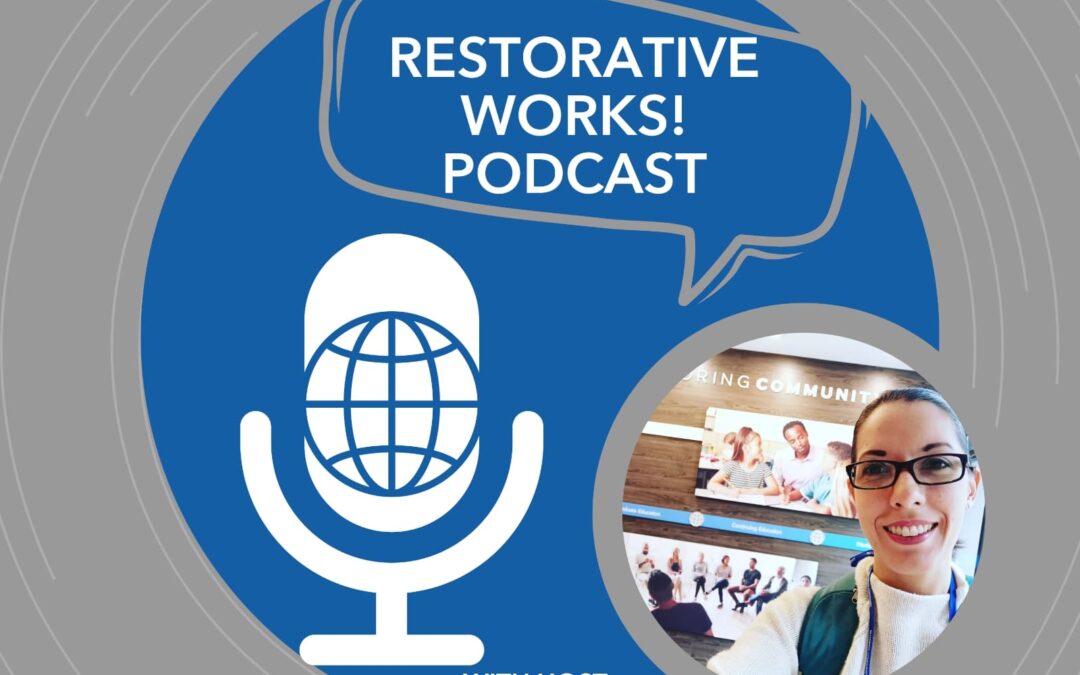
IIRP Restorative Works! Podcast
Community Matters’ CEO, Erica Vogel, and several Safe School Ambassadors, including SSA alum and current Alumni Coordinator Marin Broadbent Bell, were featured on the IIRP Restorative Works! Podcast.
They shared powerful stories about their experiences and what it takes to build safer and more connected school communities.These stories show the lasting impact of Community Matters programs and our supporters, reflected in the way students continue to strengthen their lives and communities long after the program ends.
Restorative Works! Podcast – Erica Vogel
Restorative Works! Podcast – Marin Broadbent-Bell
When Bullying Happens – Build a Family Safety Plan
By Kerry Rego
Published October 2, 2025
Walking onto school campuses to talk to parents, administrators, and students always feels charged with electricity. I’m often called in after something awful has happened such as when a social media challenge gets out of hand, when students have begun bullying others online, or parents grow concerned about their children’s digital behavior. The adults that greet me are clearly worried and the kids reflect their energy – these campuses are tense.
Parents and administrators have a limited technology background and students know more than enough to be a danger to themselves and their friends. As a social media and technology educator, I learn what the problem is and develop solutions that match the needs of my audience.
The administrators and I often agree to address the audiences in two groups – parents and children. I speak to children during the day in assemblies then parents in the evening. The presentations are designed as companion pieces, giving all parties the same language in order to communicate with each other more effectively.
I encourage you to take a look at the Upcoming Workshops and Webinars offered by Community Matters or reach out to them to coordinate a program for your campus.
Every presentation I give includes a Family Safety Plan for Bullying, one geared for children and one for adults. You and your child might work through a bullying situation together but that won’t always be the case. Your child may be navigating it on their own without your knowledge. It’s a scary thought but our job is to teach them how to be safe because we won’t always be with them. They may find themselves helping a friend through a difficult situation and their action list will guide them through it.
Treat these safety lists like an emergency drill – children especially need to know the plan and they need to practice it. Print and review the plan as a family to make sure everyone knows what to do when/if an emergency happens.
The Family Safety Plans below are adapted from advice listed on the U.S. federal government website StopBullying.gov.
Family Safety Plan for Parents:
- Get Prepared Before Bad Things Happen
- Help your child identify at least two trusted adults in their life such as a parent, relative, school counselor, pastor, etc.
- Help your child identify their closest friends or their “crew.”
- Notice Behavior
- Monitor for changes in mood or behavior and explore what the cause(s) might be.
- Try to determine if these changes happen around a child’s use of their digital devices.
- Talk to Them
- Ask questions to learn what is happening, how it started, and who is involved.
- Create a Record
- Create and maintain a record of digital or physical threats and actions with dates of events and useful details.
- Take screenshots of harmful posts, content, and communications. Save links to any online content, if possible.
- Report to Authorities
- Report offensive content to the app or social media platforms to start the process of removal.
- If the behavior happens at school, report to multiple school officials in this order – teacher, school counselor, principal, and superintendent. Keep records of your communications and let each person know whom you are reporting to keep everyone accountable.
- Inform your state Department of Education. Schools regularly fail to protect their students in cases of bullying and the more people you inform, the more likely you are to get assistance and action. If school officials aren’t helping, see the * at the end of this list.
- If the behavior happens in a non-school environment, report to the responsible adult or deciding body.
- If a child has received physical threats, or if a potential crime or illegal behavior has occurred, report it to your local police.
- Block the Bully
- Wait several days rather than blocking right away
- Increase protection and privacy settings
- Review online friends with your child. Delete any online friends or followers that may be fake. These profiles are often where bullies are hiding.
- Support
- Sometimes public intervention is appropriate. Adults and peers can positively influence a situation where negative content is posted about a child. This can include posting positive comments about the person targeted to shift the conversation in a positive direction. It can also help to reach out to the aggressor as well as the target of the bullying to express your concern about their well-being.
- Provide your love and support to the child experiencing bullying. Make sure they understand that they aren’t at fault. They might need professional mental health services to counteract the damage inflicted.
*There are no current federal laws that apply to bullying but you can learn more about the U.S. Department of Education’s Office for Civil Rights via the U.S. Department of Justice’s Civil Rights Division and options available to you and your child on StopBullying.gov.
Family Safety Plan for Kids:
- Tell a Safe Adult
- Identify at least two trusted adults in your life such as a parent, relative, school counselor, pastor, etc.
- Don’t Respond
- Engaging with the bully is adding kindling to the fire. We want to starve the fire and give the bully nothing to work with.
- Delete the apps off your phone or device, or block the offending website, rather than deleting the accounts. The bully can see you’ve deleted the account (kindling for the fire) but they can’t see that the app has been removed or the site blocked (lack of activity or response starves the flame).
- Create a Record
- Create and maintain a record of digital or physical threats and actions with dates of events and useful details.
- Take screenshots of harmful posts, content, and communications. Save links to any online content, if possible.
- Report to Authorities
- Report offensive content to the app or social media platforms to start the process of removal.
- If the behavior happens at school, report to school officials in this order – teacher, school counselor, and principal. Keep records of your reports.
- If the behavior happens in a non-school environment, tell the adult in charge. If they’re not a good option, go to your safe adults for help.
- If you’ve received physical threats, or if a potential crime or illegal behavior has occurred, report it to your local police.
- Block the Bully
- Wait several days rather than blocking right away
- Increase protection and privacy settings
- Delete any online friends or followers that you aren’t sure if they’re real. These profiles may be where bullies are hiding.
- Involve Your Crew
- Send up an “I Need Help” signal to your friends
- Talk to them about what’s going on and how you feel
- Get mental health support if you feel it would be helpful
Downloads
PDF by Kerry Rego
Google Doc Kids & Parents
____________________________________________________________________
Kerry Rego is a social media consultant, trainer, author, and speaker. Specializing in social media marketing, Kerry is associate faculty at Santa Rosa Junior College, a subject matter expertfor California Community Colleges, and a former lecturer at Sonoma State University. She has authored four books about social media strategy and reputation management.
Answering the Call: How Safe School Ambassadors® Helps Boys and Young Men Thrive
By Erica Vogel, CEO, Community Matters
Published August 13, 2025
On July 30, 2025, Governor Gavin Newsom issued an executive order to confront rising suicide rates and growing disconnection among California’s boys and young men, calling for coordinated mental health, education, and workforce support across the state. This action shines a spotlight on a crisis that extends far beyond California. Research shows young men report shrinking social circles and fewer close friendships: risk factors for loneliness and mental health struggles that school communities feel every day.
At Community Matters, we see what’s possible when students are equipped to look out for one another. Our Safe School Ambassadors® (SSA) Program is a proven, peer-led model that helps prevent bullying, reduce isolation, build connections, and create healthier school climates. This work directly advances the intent of the Governor’s order and is urgently needed nationwide.
How the SSA Program Aligns with the Executive Order
The SSA Program is a proven, peer-led model that uniquely addresses many of the challenges outlined in the Governor’s directive. It transforms students into “Upstanders” who use their influence among peers to prevent and intervene in incidents of bullying, mistreatment, and social isolation. This work directly advances several components of the executive order:
Reversing the Crisis of Loneliness and Disconnection
Governor Newsom highlights the alarming number of boys and young men who report having no close friends, with nearly 1 in 4 men under 30 expressing deep social disconnection. SSA builds authentic connection among youth by training and supporting them to recognize and respond compassionately to emotional distress in their peers.
By leveraging students’ natural social networks, the program ensures that no student, including boys who often mask their hurt as anger or defiance, feels invisible. SSA helps people connect, belong, and support one another in a safe, school-based environment.
Promoting Healthy Masculinity and Peer Support
As the executive order emphasizes, many young men suffer in silence due to outdated gender norms and a lack of emotionally attuned male role models. SSA empowers male students to lead with empathy, courage, and emotional literacy modeling healthy masculinity for their peers.
Through facilitated dialogues and ongoing adult and peer mentorship, SSA normalizes asking for help and talking about feelings, equipping students with the tools to take positive action rather than act out. In schools across the United States and beyond our borders, we have seen this approach reduce incidents of aggression, isolation, and self-harm among young people.
Supporting Early Intervention and Preventing Punitive Discipline
The data is clear: boys, especially boys of color, are suspended, expelled, or referred to law enforcement at far higher rates than their peers, often for behaviors that may be expressions of trauma. The SSA Program creates a culture of peer accountability and positive behavior reinforcement that prevents issues from escalating into punishable infractions.
Instead of defaulting to disciplinary exclusion, the program fosters a restorative school culture where peer relationships can address root causes and build resilience, helping young people stay connected to their school communities and invested in their futures.
Elevating Youth Leadership and Career Pathways
The SSA program instills leadership, communication, and conflict resolution skills that are essential for success in school, work, and life. By identifying and nurturing diverse male students as Upstanders and leaders, SSA opens doors to broader educational and career opportunities, particularly for those who might not see themselves as “traditional leaders.”
Our alumni have gone on to become social workers, educators, youth advocates, and civic leaders, often citing SSA as a pivotal turning point in discovering their sense of purpose and self-worth.
Addressing Equity and Access Barriers
Governor Newsom rightly underscores that boys and young men of color, particularly Black, Latino, and Indigenous youth, are among the most underserved by current mental health systems. SSA prioritizes culturally responsive engagement and is adaptable to the needs of diverse school communities.
Because the program is embedded in schools and led by peers, it removes many of the access barriers (like stigma, cost, and transportation) that prevent boys from receiving timely support.
A Sustainable, Scalable, and Proven Solution
While much of the state’s recent funding is short-term, SSA offers a sustainable model that schools can continue through trained site facilitators and community partnerships. Community Matters has already impacted over 170,000 students in more than 2,100 schools across 42 US states, 2 US Territories, Washington DC, Paraguay, Japan, and Canada, with data showing decreased bullying, improved school climate, and strengthened student mental health.
A Community-Based Answer to a Statewide and National Crisis
Governor Newsom’s courageous, timely call to address the mental health and social challenges facing young men demands proven solutions. Community Matters and the SSA Program specifically stand ready to partner with districts, counties, and community organizations to scale what has worked for 25+ years. Rather than creating something new, we will expand and deepen a model already delivering results: equipping students with the tools to lead, connect, and care for themselves and others. In doing so, we can transform schools into powerful incubators of healing, belonging, and hope. When we invest in peer leadership, we don’t just reduce harm; we grow hope.
____________________________________________________________________
Erica Vogel is a proud mom of 2 boys, now young men!
Both boys were Safe School Ambassadors in their high school years.

Erica has extensive experience in youth development and programming with a specialization in developing and implementing youth empowerment programs for disadvantaged and culturally diverse young people. Prior to joining Community Matters, she worked in high level leadership positions with the YMCA, the American Heart Association and Big Brothers Big Sisters. Erica has worked for Community Matters since 2010 and in 2020 took the reigns as the CEO. Erica holds a B.A. in Management and Organizational Development from Spring Arbor University.