Author: Geo Howard

Building Social Emotional Learning Through Play

by Jan Dennis

A growing body of scientific research confirms that children who acquire strong emotional foundational skills in the early years can better manage everyday social interactions later in life. One way to develop such skills is through Social Emotional Learning (SEL). Research published in Educational Reforms Worldwide states that the primary goal of SEL is to cultivate the following competencies: self-awareness, self-management, social awareness, relationship skills, and responsible decision-making.

The competencies mentioned above are essential for better adaptation to different circumstances and situations. They also facilitate academic success and the development of more prosocial behaviors, and fewer emotional and behavioral problems.

SEL through play

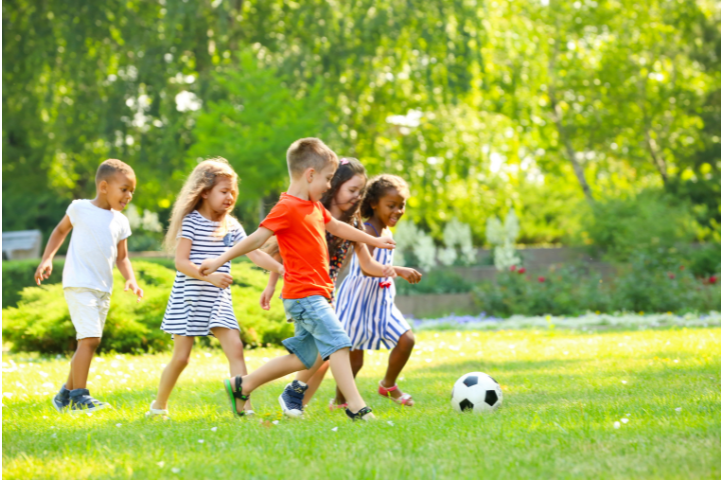
According to the Australian Council for Education Research, play is a crucial avenue for children to develop social and emotional competencies as it is often a child’s dominant activity. Through play, children are able to freely express their emotions, helping them to understand and manage their feelings. It also makes them aware of others’ feelings when they interact with their peers in play scenarios. Other ways that play promotes SEL are via communication, cooperation, conflict resolution, and creativity. Within classrooms, SEL has emerged as an important strategy to increase student engagement, inclusion, and holistic skills development beyond the preschool years, especially during distance learning.

Community Matters founder Rick Phillips has advocated for the implementation of SEL strategies as a way to combat the isolation that students felt when taking classes online. These strategies included using inquiry as a teaching practice, focusing on self-care, teaching mindfulness, encouraging students to pair with a fellow student, and using restorative practices through community-building listening circles. The positive relationships they develop and the caring culture that evolves result in life-long benefits.

The emergence of tech for SEL

While the establishment of SEL is primarily done through human-to-human interaction, there are supplementary tools that can aid in SEL, as well. One example is the AI robot toy Miko. This artificial intelligence-powered robot is specially designed to elevate learning by developing interests in varying topics and skills. The latest iteration of Miko is a voice-activated AI robot capable of initiating and sustaining a conversation with kids. Parents can safeguard kids’ interactions with Miko by setting parameters for discussion that also keep them engaged and interested. As a result, Miko can be a valuable tool to enhance kids’ social skills.

Another tool that utilizes technology to enhance SEL is the game Zoo U. This game was developed by the 3C Institute to cultivate SEL skills by caring for animals and interacting with students and teachers in a virtual environment. By simulating relatable, real-life events, educators can gain insights into how developed a student’s SEL skills are. Additionally, Zoo U is able to adjust the difficulty of each game scenario based on a student’s progress and gives personalized feedback on what areas need improvement as well as suggesting ways to better care for the game’s characters.

Similarly, Ripple Effects is a game aimed at older students that uses 428 interlinking apps to build core SEL skills. This digital program seeks to address behavior problems and underlying struggles like mental health, trauma, and everyday challenges. It also equips educators with tools for providing positive, targeted intervention for students in a variety of learning and corrections settings. Because Ripple Effects has been subjected to rigorous and extensive research, its sophisticated system delivers an optimally tailored experience to each learner.

In an ever-changing world, the development of socio-emotional skills empowers children with the emotional intelligence and social competence needed to thrive in their personal and professional lives. The tools above, when used in conjunction with a strong network of support, can further strengthen the skills needed to succeed academically and socially.


Returning guest blogger Jan Dennis is a social psychologist with a fascination for family and early childhood. When she’s not working, Jan enjoys urban gardening and spending time with her son.
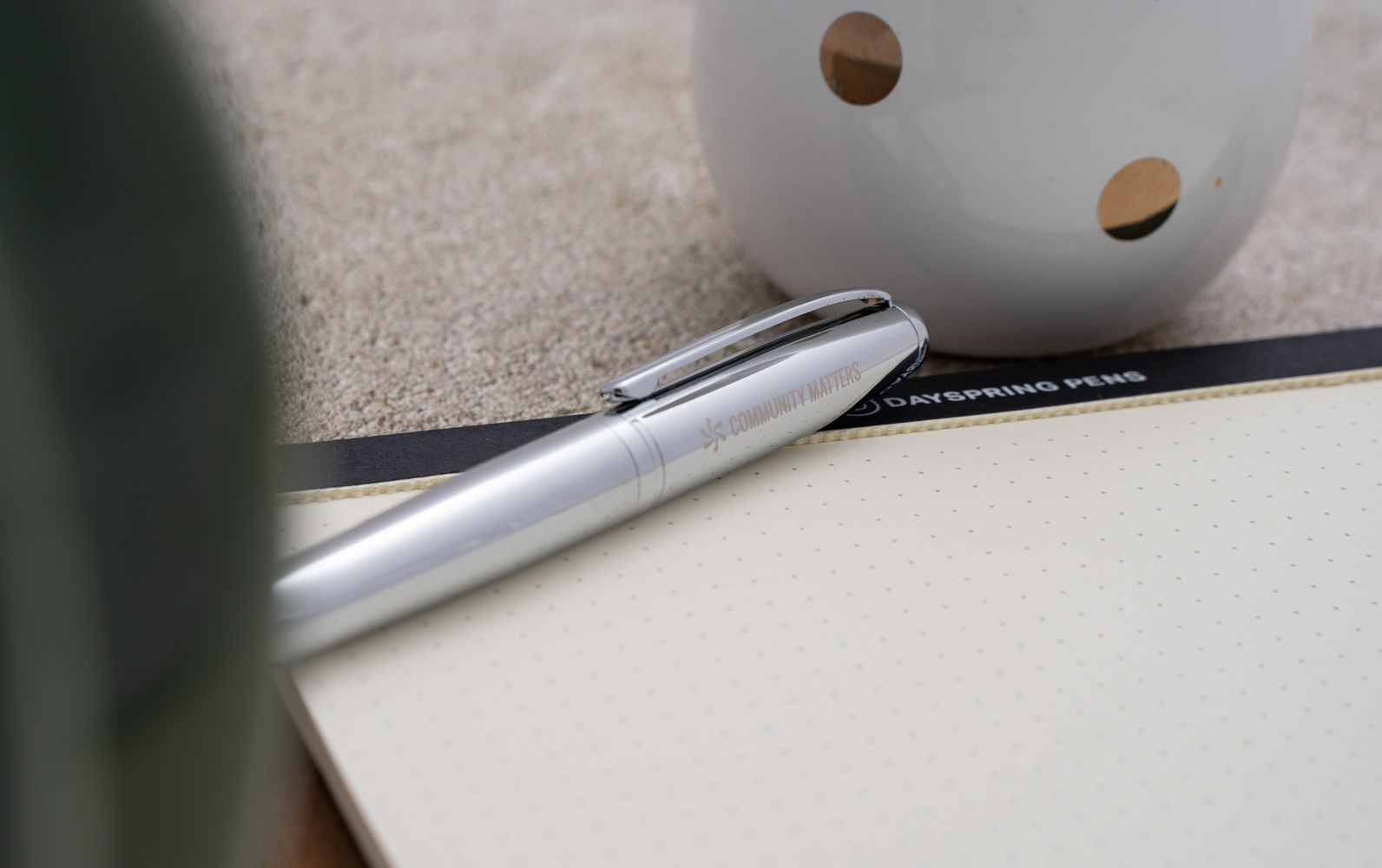

Dayspring Pens partners with Community Matters

Dayspring Pens is proud to partner with Community Matters through a donation of 40 engraved pens. It is an honor to be able to donate to an organization that works so diligently to serve students and adults through the creation of safe, welcoming, and inclusive schools and communities.

Community Matters provides services that equip and empower those in and around the school environment with their “Inside-Out Approach”, giving tools that help build relationships of trust and respect between staff, students, families, and the community at large. We hope that our donation of pens can show the respect and appreciation we hold for those who are vital to Community Matters’ work.

Located in Virginia Beach, Dayspring Pens specializes in crafting one of a kind, luxury gift pens made unique with custom engraving. Each of the engraved pens donated features the logo of Community Matters. It is our great wish that the pens will do some good to help their incredible charity as they work to improve school climates worldwide.

Creating Safe Schools Begins in the Classroom

by John Hudson

Unfortunately, school shootings and school safety are back in the news. Depending on your political bent, the solution is either hardening the target, more police, fences, locks, and arming teachers –  or more SEL focused programs, building relationships, restorative programs/practices, more counselors and more agency support.

My belief is that safety within schools should be intentional. It can and should be created and supported by every individual in the school community. One of the most significant safety threats is from disaffected, rejected, and bullied current and former students. What schools believe and how they treat everyone is key. Students who experience rejection and isolation from their peers, and indifference or shame from teachers and staff, may develop anger and hatred toward the institution and individuals. Staff who are isolated or feel unappreciated are often unable or unwilling to create caring, supportive relationships with their students because you cannot give what you don’t possess. This can lead to a toxic climate in classrooms and the school. Failure to capitalize on community resources to holistically support students, parents and teachers creates missed opportunities to address physical, mental, and emotional needs.

One of the most important investments a school or school district can make in their efforts to create a safe and caring environment for all students is to provide focused professional development to staff, in an effort to build their sense of efficacy as they transform their classroom into each student’s Home Court – a place where every student is supported, every individual wants and encourages others to do their best, supports them when they need help, and is celebrated when they are successful.

While serving as a district office supervisor of attendance, truancy, and dropout prevention in Waco, Texas, I first got a glimpse of the power of peers to support one another. As part of a comprehensive grant I authored to address a serious problem with the use of exclusionary discipline, I encountered the Community Matters program Safe School Ambassadors. The district adopted SSA as a way to improve the climate in their schools primarily by addressing student to student conflict and bullying.

I realized that creating support by students within a classroom could be a model for expanding support to all within a school community. But where to start? Clearly the answer is within each classroom. Before that can happen, teachers and staff need training, support and guidance. Providing ongoing professional development will, over time, build teachers’ and staff belief that their efforts can improve school climate and student learning. The Safe School Ambassadors Program provided an ideal model.

In my work with classroom teachers, I utilize an exercise that examines an individual’s personal theory of behavior and how that influences interactions with difficult students. We look at how to establish classroom norms collaboratively that allow discussion of how each individual wants to be treated. Modeling how to incorporate student voice and choice into daily activities, discussing the type of environment where students learn best and finally getting every individual to commit to working daily toward those goals is probably the most important aspect of teacher professional development. I also suggest one full session be dedicated to creating a clear understanding by teachers of the difference between punitive and restorative discipline. Finally, teachers need to understand that although problems or conflicts will still arise in the classroom, there can be a road map for resolution through the revisiting of norms and the existing agreements by all.


John Hudson has been an educator for forty five years. During that time he has served as the principal of seven high schools and one middle school in three states. Concerned with issues related to at risk youth for his entire career, he has consulted with school districts in eleven states on a wide variety of issues: Suicide Prevention & Intervention, Drug and Alcohol Abuse Prevention & Intervention, School Climate, School Safety and School Leadership. He has chaired the Governor’s Select Commission on Adolescent Suicide for Arizona; served as a member of the National Association of Secondary School Principals institute staff focused on issues relating to at risk and disaffected youth; served as Project Manager for the Texas High School Redesign and Restructuring Grant Program; served as Program Coordinator for the Texas Turnaround Leadership Academy and served as Supervisor of Attendance, Truancy, and Dropout Prevention and Recovery for the Waco Independent School District in Waco, Texas.

He has graduate and undergraduate degrees in education from Boston State College and a graduate degree in Organizational Leadership from Teachers College, Columbia University. Currently he is a consultant working with non-profits on initiatives to stem the School to Prison Pipeline, improve school safety and the design and implementation of Restorative Justice and practices into school policy and codes of conduct.

Being a Safe School Ambassador builds emotional intelligence

by Liv Licursi, former Safe School Ambassador

My name is Liv Licursi and I am a graduate of Carmel High School in Carmel, New York, and I am an alumnus of the Community Matters Safe School Ambassadors program. SSA had a significant impact on my development in middle and high school back in my hometown, and I know that my fellow ambassadors and peers were affected in the same manner. The culture created within our community of ambassadors and faculty leaders seemingly seeped into the culture of our school, and I believe it promoted a widespread custom of compassion, and thus, a safer school environment. The lessons I learned have stuck with me since graduating, and through the program and its trainings, I have become a more emotionally intelligent, empathetic, and action-oriented person.

The work done in small environments through family groups affected not only the students within the program, but also invited a healthy and safe school culture. This program encourages having tough, yet important, discussions, following lines of thought which we do not consistently nourish, and most importantly, acting to better communities and human relationships. Specifically, I recall the part of the training where students and faculty form small groups and each group member discusses different times when they have been a victim, a bystander, and an aggressor. This exercise helped me realize the extent to which we may never know of the internal turmoil others face, and thus, the importance of being socially and emotionally educated.

I have seen and experienced the impact of the Safe School Ambassadors program, and upon beginning my studies at college, I imagined how wonderful it would be to see SSA encompass an even greater population. Through working alongside passionate leadership at Community Matters, I envision facilitating the creation of a Safe School Ambassadors program modified for a college-age community. I am forever grateful for my experiences with SSA, and I eagerly anticipate watching the magic of this program reach and affect more young minds throughout the country.


Liv is attending Cornell University where she studies Industrial and Labor Relations and Performance & Media Arts. She most recently worked as an intern at McCabe, Coleman, Ventosa & Patterson PLLC in Poughkeepsie, NY. In her free time, she sings with the Cornell Chorus, teaches clarinet lessons, and performs musical theatre. 


Protecting your child’s online identity

by Christian Cawley, Contributor at Broadband.co.uk

Mobile devices, online chat, gaming, and social media have all contributed to making private spaces more public. It is difficult to know who children are communicating with, when, and how in a world of computers, consoles, and smartphones.

But online safety for children goes beyond digital stranger danger and cyber-bullying.

Is social media safe for children?

The simple answer to this question is “yes.” But only if it is used in a responsible, safe manner.

Social media has so many potential risks, from grooming (sexual, political, and cultist) to bullying and even identity theft. Social media companies are aware of the problems on their platforms, which is why they attempt to implement robust reporting systems.

Before giving children access to social media, it is a good idea to consider your own social media use. This should be from the viewpoint of setting an example as well as reflecting on what you have shared about your children. Will they appreciate baby photos popping up, for example? With many more parents now opting not to share photos for fear of pubescent embarrassment of their offspring, take the time to perhaps restrict who can view such photos (and perhaps others!) that you have posted.

Every social network has a minimum age for use. It is important that this is adhered to as a starting point. There is no point giving a 10 year old access to, say, Facebook, where the minimum age is 13, and being surprised when something happens.

Whatever social networks your child uses, it is smart to give them access at first through your own account. When the time comes for them to have their own, be sure to ensure it is associated with an email account you have access to, with a password you know, so that you can monitor it.

Are online conversations safe?

With so many avenues for online conversations, it is important to know who your children are talking to. Just as you wouldn’t want them chatting with strangers while out shopping or traveling from school, so you should have concerns about who they’re talking to online.

First and foremost, do your children know who they are communicating with online? If they’re chatting with friends, the content of the conversations might be an issue, but friends are preferable to strangers. Having an approved contacts list might be a good strategy for online safety, and help monitor for bullying and other abusive behavior.

But sharing information online should also be done with care. This is where a conversation is useful, one that underlines what information should not be shared online, and why this is important. Children should also be aware that nothing that is posted online can ever be truly deleted. This includes political opinions, thoughts about sex, illegal activities, and of course videos, photos, GIFs, TikToks, etc.

Keep an eye on things with mobile device monitoring

Virtually every mobile platform and game console system provides tools to help you monitor and restrict the online activities of your children.

As well as native parental control tools on Android and Apple phones and tablets, third party tools can be installed. Parental control software can restrict what applications are installed (including chat and social media apps), and how much (if any) money can be spent.

Such apps can also be used to monitor activity and even track the location of a phone. This is also useful for finding lost devices, as an alarm can be remotely activated to help you locate the phone.

Scams, phishing attacks, and other threats

An oft-overlooked risk for kids online comes from scams and phishing attacks. After all, why would cyber-criminals target children?

Well, to start off with, they might have their own bank accounts. Worse, there is a good chance your children know some of your passwords or at least personal information. Perhaps worse than that, children represent future opportunities for online scammers.

Children should be aware that unsolicited links should not be clicked. If they have email accounts and a message arrives from a person or organization they have no contact with, it should be deleted. Awareness of spoof websites, ransomware, and phishing should also be raised.

In the meantime, as a parent you can install spam and threat-monitoring email precautions, as well as make a weekly check of your child’s inbox. Overall, however, good quality email security software should provide adequate protection.

Get the balance right

While your child may be more familiar with the online world than you, plenty of tools are at your disposal to ensure their experience is a safe one.

Security software, parental control tools, and ground rules for online behaviour can and should all be used to keep your children safe online. It doesn’t matter if they’re playing online games or chatting on social media, those tools should be employed.

But suddenly introducing measures without first discussing them can lead to resentment. Instead, aim to get your children on board with using the tools, by identifying threats together and looking at the solutions that can be implemented. Decide together on an appropriate level of control.

This can also help you to establish a balance between monitoring online activity and respecting the privacy of older, more independent children.


Christian Cawley has a background in general desktop support in the public sector and specialized software support in the private sector. Christian has worked as a freelance technology writer for websites and newsstand publications since 2008.

Back to school in the strangest of times

by Brooke Jones, Vice President
Random Acts of Kindness Foundation

It’s “back to school” time… but, what a strange time it is. Every time I see the words “rise by lifting others”, I think of educators. That’s what educators do – they lift others; in turn they become better as teachers and as human beings. And, they do it in the most challenging and extreme circumstances.. as evidenced by the last year. I know the phrase is overused, but we at The Random Acts of Kindness Foundation truly believe educators (and all school staff) are heroes. You sacrifice so much for the good of your students and the promise of a brighter future for them and this world. If that isn’t a hero, I don’t know what is.

We have been working this summer to help make your jobs easier when it comes to implementing social emotional learning in your classrooms. In addition to Kindness in the Classroom, our CASEL-approved K-8 curriculum, we are extremely proud to introduce you to our New High School Curriculum. The aim of this course is to give students an opportunity to gather new and deeper insights about respect, caring, integrity, inclusiveness, and courage and to begin to apply them in new and more meaningful ways. They will better identify how our brains and bodies respond to kindness, helping them recognize not only the social but also the physical response we have when we engage in kind, caring behavior. Students will examine these concepts through socio-cultural, scientific, literary, and historical lenses, giving them better context on a larger cultural scale. Finally, they will develop and deploy a service project, which will allow them to earn up to 50 hours of volunteer service towards graduation requirements.

Our friends at Community Matters have a similar mission to equip and empower students and adults to create schools and communities that are safe, welcoming and inclusive. Their Safe School Ambassadors program (along with so many other resources they offer) creates  a wonderful way for students to improve school climate and positively impact others around the crisis of bullying in schools.

In all of our work at The Random Acts of Kindness Foundation and Community Matters we want to remind all of you heroes out there that the most important thing you can be doing right now is taking care of yourself. Self-care is incredibly important. Make sure you’re reminding yourself that you are doing the best you can. You are doing a great job.

We are wishing you the best year ever of teaching. We hope you use these strange circumstances to find new and amazing ways to teach, learn and connect. We are here to support you however we can.


Brooke wants to live in a world where people choose kindness over violence, compassion over cruelty, and action over indifference. She studied in Paris and holds a degree in art history. She also holds certifications in Applied Positive Psychology and Brene Brown’s work, The Daring Way. She delivered a TEDx talk, “Nourishment of the Soul” in 2017 where she shared her personal journey with mental illness. Outside of her time creating written content for the Foundation, she enjoys fiber crafting, creative writing and helping spread kindness in her local community with her teenage daughter. Brooke is in the process of writing a book for parents to help support them in creating and maintaining healthy and fulfilling relationships with their children.

The Importance of School Climate

The climate of a school is the visceral, almost palpable, ‘sense’ of safety and belonging that people experience on site.

Read More

Program & Services Guide

Our comprehensive list of the programs and services we offer to schools, districts and youth-serving organizations.

Download here

Why it takes Upstanders to create communities of care

by Lyndsey Burcina

Since March of 2020 when the term “Chinese Virus” was first mentioned by the most powerful man in the world, there has been an uptick in crime against the Asian American/Pacific Islander (AAPI) community. Attention wasn’t really drawn to this problem until six Asian women were killed in a mass shooting in Atlanta and an extremely brave elderly woman in San Francisco fought against her attacker and won. Then the protests and vigils and talks started. But why did it take so long to have the conversation? Why was it allowed to escalate? Because we had too many bystanders and not enough UP-standers.

The reason I adore Community Matters is because they are teaching our youth to speak up in the face of hate. They are teaching our youth to engage in conversation and distract those whose goal is to hurt someone they see as different and alter their way of thinking. They teach youth to stand up and do what’s right instead of let harmful behavior escalate and go unchecked. Community Matters gives them tools to protect those who may not be able to protect themselves. My hope is that having these services and programs implemented in schools around the world, we can continue to raise generations of children that will have this “upstanderism” ingrained in their minds and bodies, in a way that it isn’t just a program that was learned in school but a way of life that they carry with them in all they do.

Many of us have lost our sense of safety and security over the last four years. So no matter how old we are, where we come from, if we are in school or in the workplace, let’s commit to taking a lesson from Community Matters and become an Up-Stander today. We owe it to ourselves, to our kids and to the future!


Lyndsey Burcina is a veteran Safe School Ambassador, having participated as a primary school student up until she graduated high school. She uses her Ambassador skills in her daily life working as a Restorative Justice Practitioner and in conflict resolution. Lyndsey currently serves as Miss California 2021 for the Miss Japanese-America scholarship program and is the appointed Fifth District Commissioner for the Sonoma County Commission on Human Rights.

We Are Resilient

by Chuck Fisher, Ph.D., Executive Director of Dovetail Learning


Editor’s note: Community Matters believes that in these extraordinary times the traditional 3 R’s of “reading, writing and arithmetic”, need to be amended with the following new 3R’s:

~Relationships
~Resilience
~Readiness

 We are grateful to have our friend and colleague, Chuck Fisher, from Dovetail Learning, share his expertise and his personal experience on the  2nd R; Resilience. Both Community Matters and Dovetail Learning provide complementary services that support educators and students focused on school climate and culture, resilience, Social Emotional Learning (SEL), youth empowerment, and restorative practice approaches.


I was one of those kids in school who fell through the cracks. I was uprooted and moved every two years all the way through high school, from growing up in a military family. I also had multiple ACEs (Adverse Childhood Experiences) including physical, emotional, and sexual abuse, as well as being the lost child in an alcoholic family. I ran away from school in 3rd grade, I failed 6th grade, had suicidal ideation in middle school, and succumbed to drugs and alcohol in high school. By the time I finished 12th grade I thought I was a slow learner at best and dumb at worst. My academic self-esteem was in the gutter.

Fortunately, I loved athletics. I learned to swim like a fish at 3 in the Phillipines, I started martial arts (Judo) at 6 in Peru and karate at 16 in Virginia. I was on 3 varsity sports in high school and was a top-level rock climber by 21. What a weird dissonance! I dropped out of college because I was a lost learner.

Bonnie Benard, resilience researcher[1], says between 50% – 70% of traumatized youth learn to thrive. I am lucky I found my resilience. As a professional psychologist, I’ve seen too many young people fall the other way — through addiction, eating disorders, depression, and suicide — not to mention lost learning by kids like me.

The good news is we are all resilient when we tap into the magic inside us. What Anne Masten[2] calls our ordinary superpower:

“Resilience is an Ordinary Superpower. It does not come from rare and special qualities, but from the everyday magic of being human.”

I eventually discovered that I love to learn and now it is one of my very highest values. I had to drop being a victim of my circumstances to become the author of my own life. ACEs Aware, a CA initiative to drop Adverse Childhood Experiences by half in one generation is a leading force in bringing ACEs screening to pediatricians so that children and families can begin the healing journey. ACEs Connection has a multitude of resources for strength based practices for educators.

Most of us have experienced being hijacked from our best self and we also know how to bring ourselves back into balance—to center. But it takes practice and skill to do it well. I am now a black belt in Aikido—the peaceful martial art—and I practice Centering myself every day. I now train teachers, pediatricians, and families in the lost art of Centering, Connecting, and Collaborating. What we call personal resilience, relational resilience, and group resilience.

The next time you see a lost child, or a teenager caught in drugs/alcohol, think of me. There is a miracle inside of every child waiting to be found.

If you want to know more about the Open Education Resource called We Are Resilient™, which teaches Centering, Connecting, and Collaborating skills, it can be found at Dovetail Learning. “Working together, we can heal ourselves and generations to come. It’s all of us; We are the cure.” – Dovetail Learning


Chuck Fisher, Ph.D. is Executive Director of Dovetail Learning and an architect of the We Are Resilient™ approach. He has worked in and with schools as a teacher, school counselor, and psychologist his entire career. He is a former trainer for the Heartmath Institute and the Passageworks Institute on engaged teaching and has been a development partner and consultant on SEL curriculum.

[1] Benard B. The foundations of the resiliency framework. Resiliency in action. 2014:1-5.
[2] Masten AS. Ordinary magic: Resilience processes in development. American psychologist. 2001 Mar;56(3):227