
Rick Phillips, Founder of Community Matters is joined by Keith Hickman, International Institute for Restorative Practices (IIRP) Executive Director of Collective Impact to provide a roadmap for building and implementing a best practices “30 Day SEL Plan”, a common sense approach that promotes connection as the most effective value and behavior for meeting the needs of students and staff as schools re-open.
Author: Geo Howard
“Maslow” to “Bloom” Resource Packet – First 30 Days SEL Planning
Resource links and handouts to help schools prepare to provide SEL support to students and staff returning to campus from distance learning.
“Maslow” to “Bloom” Resource Packet
Belonging is Common Sense
by Keith Hickman, Executive Director of Collective Impact, IIRP Graduate School
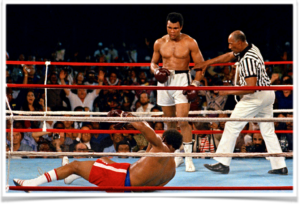
On October 30, 1974, the sports world was turned on its head, when a 32 year-old former heavyweight boxing champion from my hometown in Louisville, KY, regained his title as a major underdog in Kinshasa, Zaire. Muhammad Ali’s defeat of a younger and seemingly invincible George Foreman was a defining moment in my life as an 8 year-old Black kid in search of belonging in a segregated city. It was during the post-fight interview, among the cheers and chants of “Ali Bomaye”, when his powerful words defined belonging for me and many other Black Louisvillians that evening. He looked directly into the camera, shook his finger and said “hello to all my friends in Louisville, KY…where I started.” Oh my, I thought, did he just say Louisville, and call me a friend? He continued, “my greatness started in Louisville, KY.” What, did he just say Louisville was great, that I was great? Then he shouted into the mic in a chanting rhythm, “Louisville, KY is one of the greatest cities in America…Louisville is the greatest, Louisville is the greatest, Louisville is the greatest.” With mouth agape, I knew then, I was somebody, I belonged, because the “People’s Champ” had made that clear to me and to the world. You see, Ali did that for us by simply remembering his roots in Louisville, where his greatness came from, where he belonged, and where he would return after his passing in 2016.
A sense of belonging is a strong connection to family, community/neighborhood, and school. Dr. Karyn Hall, Founder/Director DBT Center of Houston, in the March 24, 2014 issue of Psychology Today, views belonging as “a human need, just like the need for food and shelter.” For Black and Brown students, it is critical, because “feeling that you belong is most important in seeing value in life and in coping with intensely painful emotions”, a key point made by Dr. Hall.
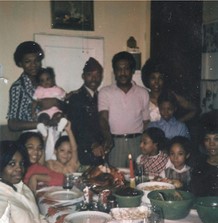
My journey, like many BIPOC students across this country, is a story of reclaiming human dignity and belonging. Growing up the youngest of ten, during the height of court-ordered school integration or busing, was a terrifying moment as a child that still makes me uneasy to this day. This is when I remember becoming aware of how racial identity and racial politics were going to play a role in my educational journey. Therefore, I needed an out, another option, to stop this thing called “busing” that was taking me away from my community and my neighborhood friends. The thought of starting middle school by hopping on a bus, something that I had never done before, riding it to some unknown place, and then fitting in, was scary to say the least, especially given the violent racist reactions and resistance that I witnessed on local television to Black children being bused to mostly “white schools”. Shouts of the “N-Word”, the turning over of school buses, and the vitriol being spewed for us to “go home”, from the mouths of white parents and white students, was quite traumatic. My response, my first act of protest, was to resist in the best way I knew how and make the case to my parents for an alternative solution.
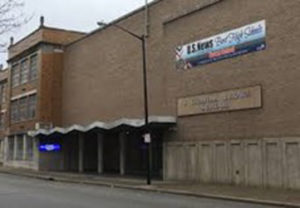
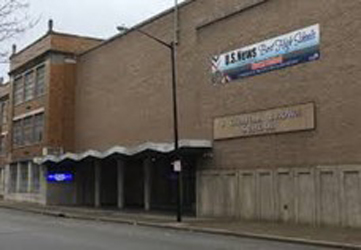
To my luck and surprise, the J. Graham Brown School, the first “magnet school” in the Jefferson County Public School District (JCPS) in Louisville, had recently opened. The genius behind the school was founder Martha Ellison, a visionary and early restorative practitioner, who believed,
“We do not claim to be better than any other school, but our informal, less authoritarian, open environment, combined with the degrees of emphasis on the arts, diversity and the community, combine to create a visible, observable difference and to provide another option for Jefferson County student and parents.”
Now, that was a school I could happily skip to. There, my roots of belonging were nurtured by educators that were courageous and caring and not threatened by my Blackness. So why is creating a structure of belonging beyond hope so important? Because hope requires action.
Structuring Belonging
The amazing Peter Block, American author, consultant, and community builder, powerfully reminds us that,
“We are a community of possibilities, not a community of problems. Community exists for the sake of belonging and takes its identity from the gifts, generosity, and accountability of its citizens.”
In fact, our youngest citizens, that walk in and out of school doors every day, are truly seeking the gifts adults have to offer. If the invitation is genuine and meaningful, then the student gift in return is authenticity of self and community. Therefore, students need to be accepted for who they are, both problems and promises, and their potential nurtured by every caring adult on staff, thus opening up the possibilities that await them. A structure of belonging can’t exist when students are segregated, isolated and marginalized, which often occurs when adults use their authority ungracefully and punitively.
In recent studies by the National Commission on Social, Emotional, and Academic Development, 2019 and the Search Institutes report on Insights & Evidence: The Intersection of Developmental Relationships, Equitable Environments, and SEL, 2020, organizations and schools that fully integrate SEL in everything they do, achieve the full promise and outcomes of the methods. The critical variable, they show, is relationship. In fact, student transformation is likely to occur as these relationships develop within the context of diversity, equity, and inclusion. And report after report points to the fact that student connection and belonging are strong indicators of academic, social, emotional and post-secondary success. We know from the extensive research from Healthy People 2030, that health and mortality are associated with levels of education. As that report states,
“Children who routinely experience forms of social discrimination — like bullying — are more likely to struggle with math and reading. They’re also less likely to graduate from high school or go to college. This means they’re less likely to get safe, high-paying jobs and more likely to have health problems like heart disease, diabetes, and depression.”
I return back to my own experience at the J. Graham Brown School, the only school in the State of Kentucky where kindergartners and seniors learn together under one roof —this is belonging and connection! Where cross-age mentoring and learning opportunities are inter-generational – this is belonging and connection! Where self-directed learning is student voice and agency – this is belonging and connection! And inclusivity and celebration of diversity is the demographic and reality – simply put, belonging and connection!
Equity is Belonging
You can’t build equity without students belonging and being connected to their schools. This requires a systemic and intentional approach to create learning environments that are multimodal. For example, recently the Collaborative for Academic, Social and Emotional Learning (CASEL) and the IIRP Graduate School, co-wrote a white paper supporting aligning restorative practices and social and emotional learning to improve school climate by strengthening relationships throughout the school building.
There are five areas that schools must target in their whole-school approach:
1. Align RP and SEL under a single initiative.
2. Integrate preventive practices into all aspects of daily life in the school.
3. Establish restorative responses to behavior that promote SEL.
4. Strengthen staff skills and mindsets that mutually reinforce RP and SEL so they can model practices and support students.
5. Involve students, families, and community partners in SEL and RP initiatives.
Aligned, these two evidenced-based approaches share common characteristics for inclusive and welcoming environments, healthy relationships for all students, long-term academic success and social-emotional well-being, and reaching equitable opportunities and outcomes. These common characteristics were definitely elements throughout my K-12 experience.
I feel fortunate that the Brown School created a space for me to belong during one of the most traumatic times of my childhood; that I learned early on from caring adults what social, emotional and cultural connection meant – and that I had a hero, the “People’s Champ”, that looked me in the eyes from the continent of Africa and proclaimed that day in 1974 that I was great and that “Louisville, KY is the greatest city in America.”
 Keith Hickman is the International Institute for Restorative Practices (IIRP) Executive Director of Collective Impact. In this role, he works with partner organizations, both domestically and globally, to pursue the IIRP mission of positively impacting social health. He served as an advisor to the Maryland Commission on the School-to-Prison Pipeline and Restorative Practices, is a partner scholar on the CASEL Equity Work Group, and is a member of the Research Development and Design Team for the California Safe, Healthy, Responsive Schools Network. Keith and IIRP are valued partners and collaborators with Community Matters.
Social-Emotional Learning – Strategies for Increasing Academic Achievement and Improving Mental Health
Social-emotional learning is not in competition with academics – in fact, it is integral to academic success.
By making social-emotional learning a top priority, and having a well-developed SEL plan, students can emerge from this pandemic with greater resiliency, secure in the knowledge that they have adult allies at school who are there to assist them.
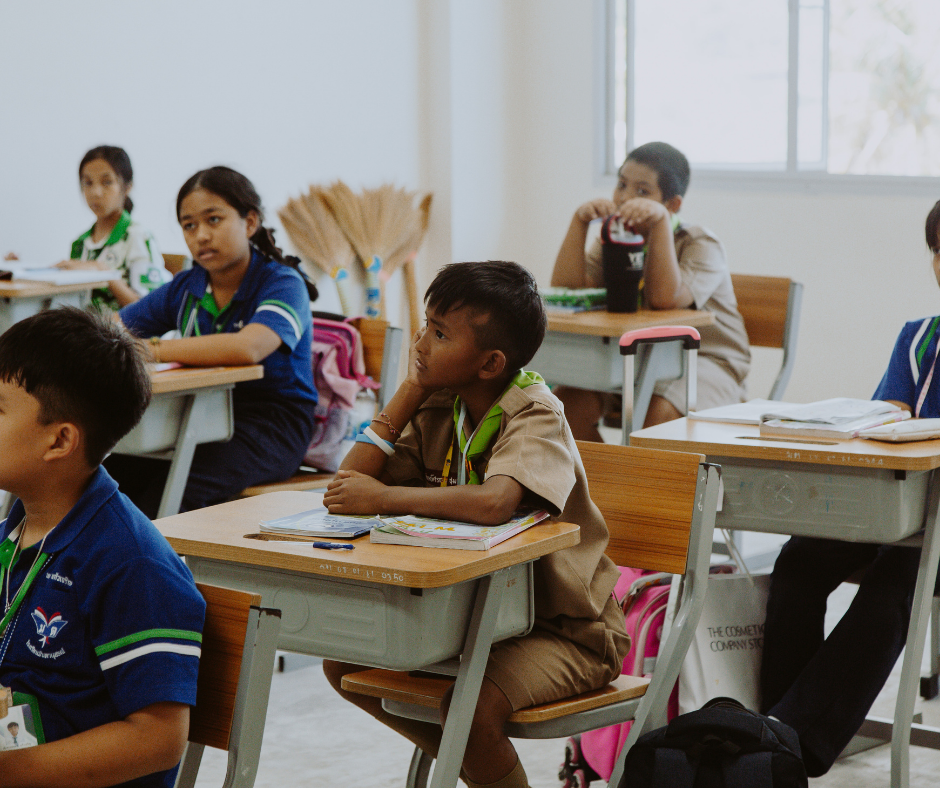
Social Emotional Learning = Positive Student Outcomes: Critical Strategies for Increasing Academic Achievement and Improving Mental Health
By Rick Phillips, Founder, Community Matters
Social-emotional development is not in competition with academics
– in fact it is integral to academic success.
The impact of the COVID-19 pandemic and the related losses is not seen in the death toll alone. It has also taken a terrible toll on our country’s students, families and school staff. Educators everywhere report that social isolation and loneliness is negatively affecting our students and contributing to failing grades and declining mental health. As reported in Education Week, a survey by America’s Promise Alliance of 3,300 teenagers in June found that they are much more concerned than usual about their health and the health and financial stability of their families.
- Over a quarter of teens said that they are losing more sleep, feeling more unhappy or depressed, feeling under constant strain, or losing confidence in themselves.
- Forty percent said they had not been offered any social or emotional support by an adult from their school while their school buildings were closed last spring.
Unfortunately, there is no simple answer or a single curriculum to effectively address the issues of disconnection and uncertainty. What we know is that the most constructive way to deal with issues of anxiety, depression and isolation is through connection – connecting with friends, family and trusted others. Therefore, school leaders must develop and implement innovative school-wide SEL plans, plans that help children and young people feel connected, stay positive and remain hopeful.
The good news is there are many organizations including CASEL and others, who have developed strategies, resources, tools and activities that effectively address social and emotional learning and support academic achievement.
Here at Community Matters, our dedicated team has been developing practical and easy-to- use SEL resources as well as converting many of our current SEL and youth voice programs into a virtual platform that can support schools while distance learning.
The following are some of the strategies and actions that Community Matters recommends and provides to schools as part of effective SEL planning while distance learning.
- Use inquiry as a teaching practice – encourage all teachers to ask questions as a way to build and strengthen trust with students as well as provide them with the opportunity to share their feelings and issues
- Focus on self-care – Help students identify self-care practices that they can utilize while learning from home, such as exercise, journaling, engaging in art and music, etc.
- Teach mindfulness – Help teachers increase their capacity to provide age-appropriate best practices of mindfulness including, breathing, meditating.
- Encourage journaling – Introduce the value of gratitude journaling as well as journaling feelings, concerns, hope and wishes.
- Buddy Up – encourage students to pair up with a fellow student and help each other with both schoolwork and feeling connected.
- Empower students – provide opportunities for students to engage in meaningful activities and volunteering, knowing that committing to something that’s greater than oneself contributes to improved emotional health.
- Use music and art – provide ideas and resources for utilizing music and art while learning from home.
- Use restorative practices – use community building listening circles to support students to share and connect and affective statements in dealing with student behavior.
- Provide resources for addressing mental health issues – identify and share how to access hot lines, podcasts, websites and help students also identify trusted adults in their lives they can reach out to.
While many of these ideas seem clear and understandable to some, there are some teachers and staff who do not have experience teaching SEL and as a result are uncomfortable in that domain. The key to overcoming their reluctance and gaining their buy-in is to provide them with the resources, support and time to learn and to deliver these essential SEL practices.
Community Matters stands ready and committed to assist educators with support and resources by:
- Providing a no-cost “discovery session” which will assist educators in assessing what’s working, what’s not and what needs to be done to have an effective SEL plan in place
- Providing best practice professional development training, both on-line and in-person
- Providing best practices for gaining school-wide buy-in and delivering online training for administrators and other key staff
Students across our country are struggling in the upside down COVID-19 world. It is difficult, if not impossible, for them to focus and to process academic information with brains that are anxious, stressed and distracted. If we want students to pass tests and maintain their academic achievements, we need to double down on efforts to create a positive school climate and address the emotional welfare of the students in our care.
By making social and emotional learning a top priority, and having a well-developed SEL plan, students can emerge from this pandemic with greater resiliency, secure in the knowledge that they have adult allies at school who are there to assist them. When this social-emotional foundation is firmly established, students will be better able to focus, participate, achieve and even thrive. The positive relationships they develop and the caring culture that evolves will have life-long benefits for us and them, long after the pandemic is over.
Contact Community Matters for your no-cost discovery session and learn more about our programs and services at community-matters.org.
Rick Phillips is renowned for his expertise and extensive work in the field of school safety and school climate improvement. He is the founder and former Executive Director of Community Matters, and is the lead developer of the evidence-based program Safe School Ambassadors® (SSA), implemented in over 2,000 schools across 43 states in the U.S., Puerto Rico, Canada, Japan, Paraguay and Guam.
Rick earned his Master of Science Degree in Education from the University of Southern California, where he was a recipient of a United States Office of Education Fellowship. He has been a principal and teacher at elementary, middle, and high schools, a school district and county office of education administrator, and a Regional Director at the Healthy Kids Center for the California Department of Education.
Safe School Ambassadors® – Stories of Impact
By Shaylene King, Community Matters Trainer
When I began training with the Safe School Ambassadors® Program almost five years ago, I knew it was the solution to positively change school climate on campuses. What I didn’t realize, however, was that Safe School Ambassadors not only changes school climate, it changes lives. I know we all have stories we could share to affirm the work we do but I want to share three that have been pivotal to me in recognizing how lives of the past, present and future have been changed because of our Safe School Ambassadors Program.
Past: A few years ago, in conversation with my waiter after an SSA training, I mentioned why I was in town. Tears pooled in his eyes as he told me he was once a Safe School Ambassador. He shared how the job and actions as an Ambassador were life skills he’s used in his everyday life with friends, coworkers and even his family since graduating from high school over 20 years ago!
Present: Recently after debriefing the training activity Just By Looking, a student gave me a note which read, “Thank you. I’m so excited to have a family group because it’s the first time I’ve ever had a real family.” I’ve seen this activity bond students, adults and family groups but I didn’t understand the magnitude it could play in the life of one student individually.
Future: A Counselor and SSA Program Advisor I’ve worked with for 3 years shared with me how two Ambassadors thwarted a school shooting when a student showed them a gun and stated how he planned to use it. The Ambassadors noticed the type of mistreatment, had to think about what to do and chose the action Getting Help, quickly going to an adult they trusted. Students from this school who might not be alive today have a future because Ambassadors did the job we’ve trained them to do. That’s the power of the Safe School Ambassadors Program!
Shaylene King is an author, educator, anti-bullying activist, and trainer with Community Matters. She is the founder of The Mean Girl Extinction Project, a nonprofit whose mission is to end girl on girl bullying.
A Call to Action: How to Meet the Educational Crisis Facing Students, Staff and Families
As educational leaders meet to address the growing number of students experiencing anxiety and failing grades, one thing is clear; we cannot expect students to thrive in academics when their social emotional needs are not being met. Research has shown that until students feel safe and connected to a caring school community, learning and academic achievement is compromised.
If we want our young people to achieve, pass their classes and graduate then job #1 for our schools is to develop and implement a Social and Emotional Learning (SEL) Plan. Such a plan provides resources, training, and support to school staff to help students process their emotions, get the help they need and connect with peers, so each student knows they are not alone in hard times, and that the school “has their back”. Until these actions are taken, many students will likely struggle and even fail.
Here are some critical action steps that can be taken while distance learning and some to be initiated in a hybrid setting (distance learning combined with classroom instruction).
7 Recommended Practices to Promote Social Emotional Wellness in Distance and Hybrid Classrooms:
- Restorative Practices approaches such as Listening and Community Building circles
- Development of SEL competencies
- Social activities that promote positive connection, communication and reflection (Journaling, icebreaker games)
- Peer support groups to assist struggling students or prevent students from further isolating
- Advisory periods that provide small group processing and support
- Individualized support for students with greatest needs
- SEL skills training and support for students
Community Matters understands the importance of helping students feel connected and empowered during this time. Our programs for students and adults support school efforts to utilize pro-social practices that foster connection, promote digital and real-world citizenship, and improve well-being and mental health. We also offer training for staff and administrators that support them with restorative practices skills and provide tools to cultivate classroom communities where students’ emotional needs are addressed so they are prepared to achieve academically.
Helping our youth to thrive in times of uncertainty provides unique opportunities for collaboration to strengthen our communities. Let’s work together to make sure students can succeed despite the obstacles presented by the current crisis.

Connecting with Students Online Using Community Building Circles
This series of 5 interactive modules will engage and motivate as we delve into the beneficial possibilities of using Circles with students in online communities. Community Building, Responsive, Curriculum and Restorative Circles will be explored as participants join in and design Circles they can immediately implement with their students.
Date & Time:
February 16 – March 16, 2021
3:00 – 4:30 PM Pacific time each Tuesday:
Feb.16, 23, March 2, 9, 16
This training is for staff and administrators. Limited to 30 participants.
Handouts will be provided via email prior to the first module.
T his training is led by Laurie Stanton, Community Matters Trainer. Laurie has been a Safe School Ambassadors® and Restorative Practices trainer for many years and has used Restorative Practices within her classroom, her school site, and now within other districts. She firmly believes that relationship building with each student is the key to a better classroom culture, school climate, and community as a whole.
Complete the form below to pay by credit card.
Connecting with Students Online Using Community Building Circles
NOTE: This session has been cancelled; to register for the December 7 – 11 session, click here.
This series of 5 interactive modules will engage and motivate as we delve into the beneficial possibilities of using Circles with students in online communities. Community Building, Responsive, Curriculum and Restorative Circles will be explored as participants join in and design Circles they can immediately implement with their students.
Date & Time:
November 16 – 20, 2020
9:00 – 10:30 AM each day
This training is for staff and administrators. Limited to 30 participants.
Handouts will be provided via email prior to the first module.
This training is led by Laurie Stanton, Community Matters Trainer. Laurie has been a Safe School Ambassadors® and Restorative Practices trainer for many years and has used Restorative Practices within her classroom, her school site, and now within other districts. She firmly believes that relationship building with each student is the key to a better classroom culture, school climate, and community as a whole.
Why Social and Emotional Learning Begins at Home
by Jan Dennis
Whether it’s building a strong vocabulary or solving mathematical equations, a child’s life revolves around learning. However, some lessons go beyond the chalkboard — especially those that involve their social and emotional well-being.
From helping them understand their emotions to setting the right goals and showing empathy to others, as a parent, you want your child to be equipped with the necessary social and emotional skills through social-emotional learning (SEL). And to ensure that your child develops them, it’s important to remember that learning always starts at home.
Why You Need to Teach Your Child Social-Emotional Learning
Your child is in a special stage where they’re filled with genuine curiosity. And at home, they’re presented with opportunities to learn more about the world. For instance, if you catch your child watching the news, they shouldn’t only be informed about the current events, but also understand the social and emotional aspects of the issues. This, in turn, will help them gain value-adding perspectives on life that they’ll take to the classroom, playground, and into the future. In fact, researchers from the University of Washington have found that social and emotional skills are key components of a child’s educational success and future interpersonal adjustment, which is why parents need to instill these values early on.
However, while all parents want what’s best for their children, this is much easier said than done. And despite the wealth of books, research, and well-meaning relatives and friends, it’s normal to still feel a little lost as a parent — especially with regard to SEL — and that’s ok. Angie Walston, a Certified Family Life Educator and a professor of human development and family studies at Maryville University, highlights the importance of being proactive and compassionate towards children and the unique ways they are learning about the world around them. She teaches the 3-Cs: compassionate, consistent, and calibrating, and this approach also provides parents with a strong foundation in fostering their child’s SEL, as they tap into their own social and emotional skills.
How You Can Teach Social-Emotional Learning at Home
But, how exactly can you help your child cultivate their SEL? Here are some key ways to help you at home.
Create a Routine for Them
To help your child get in touch with social and emotional beings, they must be in a safe and stable environment. To this end, you should establish a routine for them. Child therapist Genevieve von Lob told the Huff Post that consistency and structure are especially calming for children. A balanced and healthy routine will make them feel safe and give them confidence as you teach them SEL.
Encourage Them to Help Out
Teaching your child about the important issues around them is crucial for their SEL. Whether it’s teaching them how to donate old toys or taking them to a soup kitchen, encouraging them to help others will not only help them strengthen their self-awareness, but also teach them to see the world from the perspective of others.
Partner with Your Child’s School
As Community Matters founder Rick Phillips previously shared here, it’s equally important that your child is in a safe environment at school to foster their SEL. That being said, you should get in touch with their teachers and ask how they’re helping your child develop their social and emotional skills. This way, you can further enhance their development, while ensuring consistency for their learning.
Jan Dennis is a social psychologist with a fascination for family and early childhood. When she’s not working, Jan enjoys urban gardening and spending time with her son.